
Group Therapy Services

Upcoming Groups

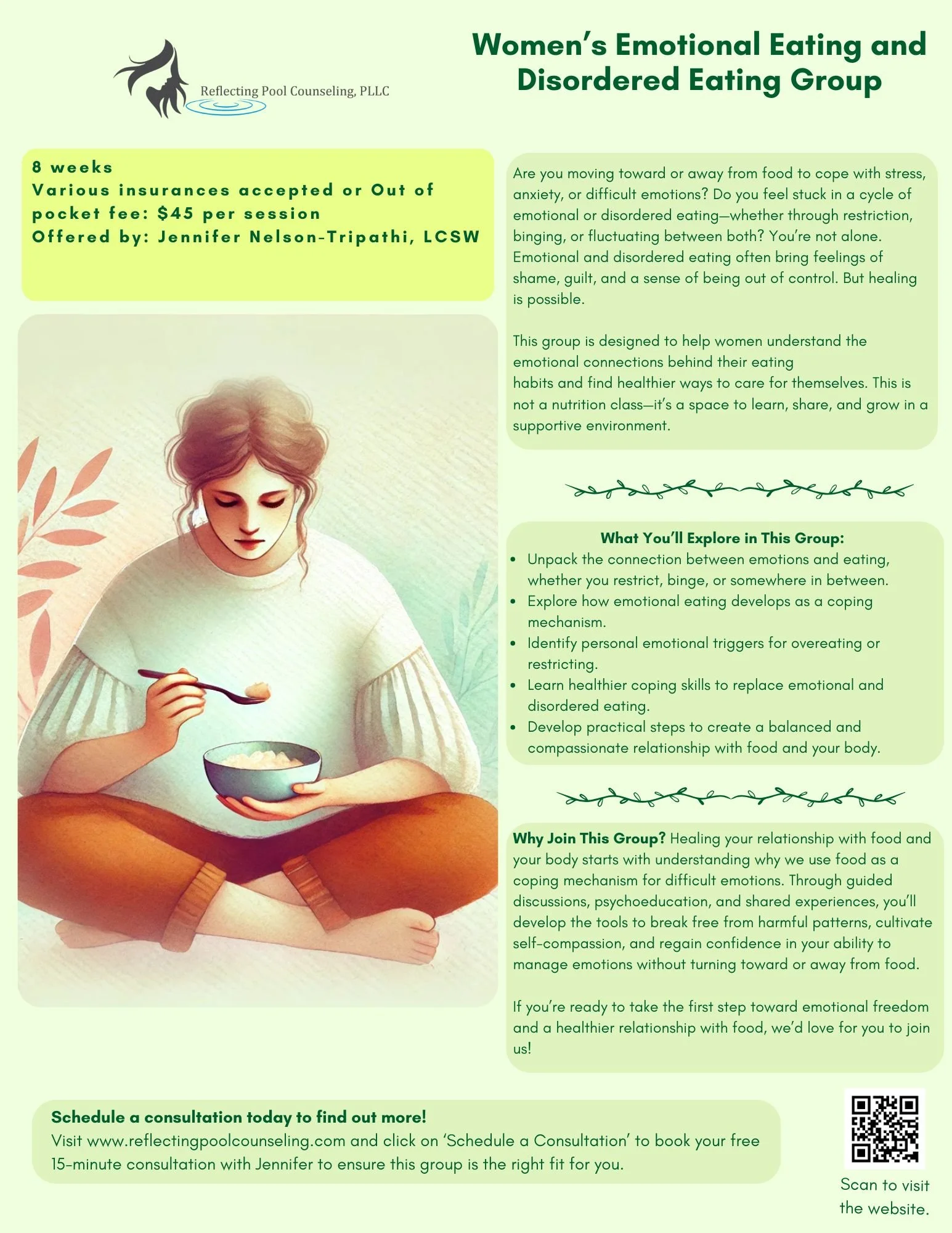
Women’s Emotional and Disordered Eating Group

Next group will be in May 2026. Stay tuned for specifics!

8 weeks for one hour (Virtual)

Various insurances accepted or Out of pocket fee: $45 per session

Are you moving toward or away from food to cope with stress, anxiety, or difficult emotions? Do you feel stuck in a cycle of emotional or disordered eating—whether through restriction, bingeing, or fluctuating between both? You’re not alone. Emotional and disordered eating often bring feelings of shame, guilt, and a sense of being out of control. But healing is possible.

This group is designed to help women understand the emotional connections behind their eating habits and find healthier ways to care for themselves. This is not a nutrition class—it’s a space to learn, share, and grow in a supportive environment.
What You’ll Explore in This Group:

  • Unpack the connection between emotions and eating, whether you restrict, binge, or somewhere in between.

  • Explore how emotional eating develops as a coping mechanism.

  • Identify personal emotional triggers for overeating or restricting.

  • Learn healthier coping skills to replace emotional and disordered eating.

  • Develop practical steps to create a balanced and compassionate relationship with food and your body.

Why Join This Group? Healing your relationship with food and your body starts with understanding why we use food as a coping mechanism for difficult emotions. Through guided discussions, psychoeducation, and shared experiences, you’ll develop the tools to break free from harmful patterns, cultivate self-compassion, and regain confidence in your ability to manage emotions without turning toward or away from food.

If you’re ready to take the first step toward emotional freedom and a healthier relationship with food, we’d love for you to join us!

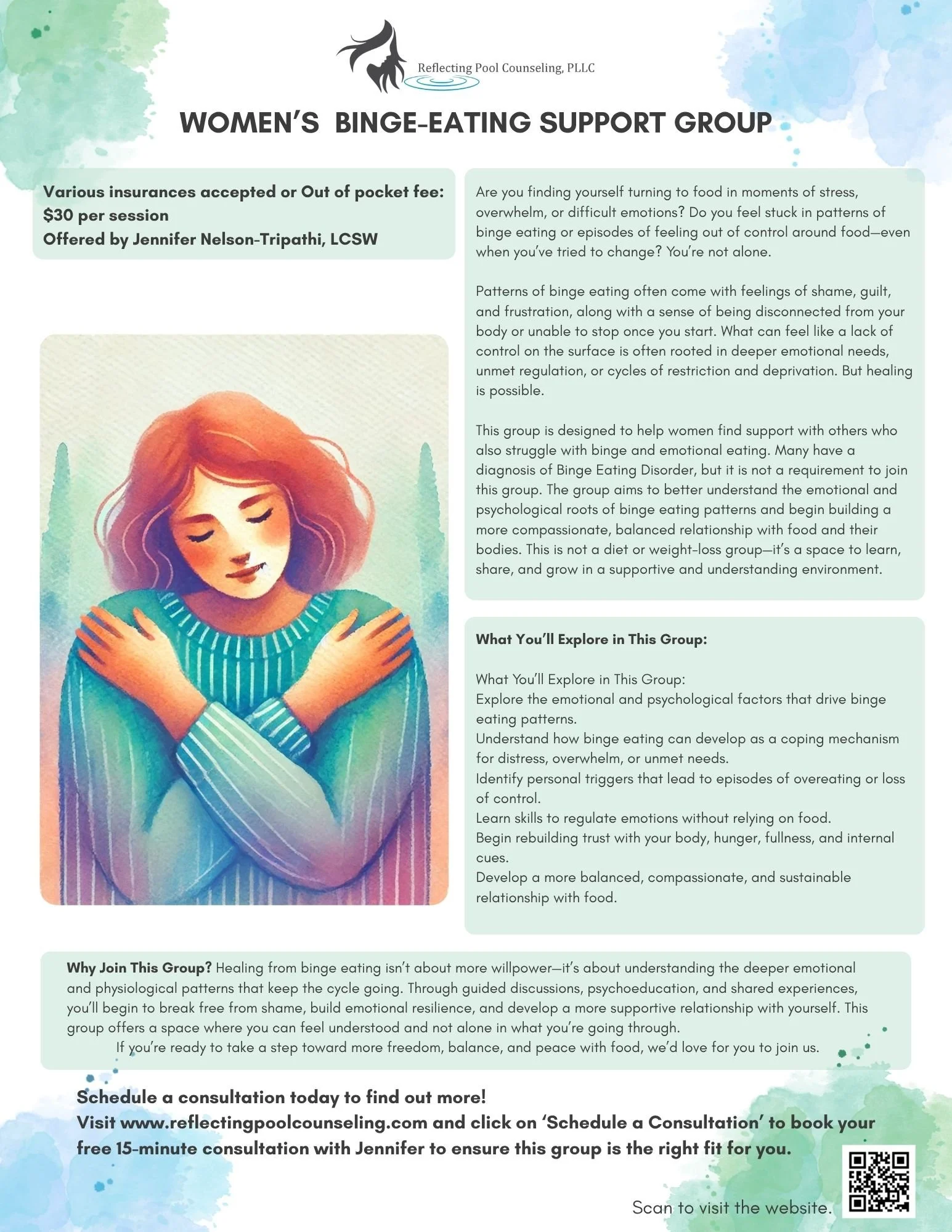
Women’s Emotional and Binge-Eating Support Group

Thursdays 5:00-6:00 pm PST / 8:00-9:00 pm EST. Rolling slots currently open. Must have an official diagnosis of Binge Eating Disorder (BED).

IF YOU ARE INTERESTED IN ANY OF THE ABOVE GROUPS, PLEASE SCHEDULE A FREE CONSULTATION TO ENSURE THE GROUP IS A GOOD FIT FOR YOU!

Group therapy offers many benefits, such as:

Group therapy offers a powerful and effective way to engage in healing work within a supportive community setting. For many individuals, it provides meaningful growth while also being more accessible and collaborative.

Cost Effective
Group therapy is typically more affordable than individual therapy, increasing accessibility for those who may not be interested in or able to participate in one-on-one sessions. While individual self-pay sessions in private practice often range from $125–$200 for a 50-minute session, group sessions are generally offered at a lower per-session rate for a longer duration, creating significant financial savings over time.

Less Intense Setting
For some individuals, the depth and focus of individual therapy can feel overwhelming or intimidating. Group therapy offers a shared environment that can feel more balanced and relational. The presence of peers often creates a sense of shared responsibility and emotional pacing that feels supportive rather than intense.

Support and Social Connection
Group therapy reduces isolation by bringing together individuals navigating similar experiences. Participants benefit from shared understanding, normalization of struggles, and the development of authentic connections. Many individuals report that hearing others articulate similar thoughts and feelings can be deeply validating and healing.

Perspective and Feedback
Groups provide diverse perspectives and lived experiences. Members are able to offer insight, encouragement, and alternative ways of viewing challenges. This collaborative exchange often helps participants expand their thinking, increase self-awareness, and consider new approaches to problem-solving.

Skill Building and Practice
Group therapy provides a structured environment to develop and practice skills such as emotional regulation, self-compassion, boundary setting, distress tolerance, and effective communication. It also offers opportunities to practice vulnerability and receive feedback in real time. Members not only gain support, but also experience the empowerment that comes from supporting others.